Life in a Tank: Zoom in on Captive Orcas Welfare
The debate around keeping orcas in captivity is one of the most polarised in animal welfare. On one side, marine parks and zoological institutions point to accreditation standards, advances in veterinary care, and decades of scientific contribution. On the other, a growing body of peer reviewed evidence documents a consistent pattern of physical and psychological deterioration across every captive population studied. Although the quality of some facilities are better than others, experience and expertise of captivity does not automatically warrants animal welfare. The science matters more than the sentiment, and when you follow the evidence honestly, it tells a clear story.
The Industry Contradiction
When the public or independent welfare advocates question the conditions inside marine mammal facilities, the institutional response follows a predictable and defensive script. The European Association for Aquatic Mammals (EAAM) and the institutions it represents regularly expresses deep offence at what it characterises as ideological campaigns led by amateur, self proclaimed experts. In their official briefings, these bodies claim a position of absolute moral and scientific authority, declaring that where it took decades of knowledge, care, and science to protect these animals, it takes only a slogan to destroy public trust. They position themselves as the sole knowledgeable guardians of cetacean well being, insisting that their internal welfare assessments are conducted using scientifically validated metrics unavailable to outsiders.
While the zoological community demands blind deference to their expertise because they hold the data, they routinely weaponise that data to shield themselves from external regulation or ethical scrutiny. They claim that accredited facilities ensure optimal physical health and behavioural well being, but if we look past corporate messaging and emotional slogans, we must accept the industry’s own invitation to rely strictly on the data. As a veterinarian and conservation medicine professional, I agree that science, rather than public relations, should dictate our understanding of cetacean well being.
How the Collections Were Built
It is worth remembering that every captive orca alive today is descended from animals taken from the wild. The industry did not begin with a breeding programme. It began with boats, nets, and in some cases, explosives. The case of the Penn Cove hunt in August 1970, where more than 80 orcas were driven into the cove using speedboats, spotter planes, and explosive charges will forever be a sore memory. That day, seven killer whales were pulled out of the water for sale to marine parks around the world but at least five drowned in the nets, most of them calves. In an attempt to conceal the true death toll, some of the dead whales were sunk with rocks.
The early decades were not just ethically troubling; they were also catastrophically lethal. Ridgway’s 1979 analysis of reported causes of death in captive orcas documented facilities in the 1960s and 1970s as widely “inadequate,” with correspondingly high mortality rates. The overall median survival estimate for all captive killer whales through the early period was 6.1 years, but many animals died during transport or within days or months of arrival. The programme that marine parks would later describe as essential conservation infrastructure began as an experiment in which the animals were the expendable variables.
Physiology of Confinement
Before examining what captivity does to the body, it is worth establishing what it takes away from a life that has evolved over millions of years to function in an entirely different context.
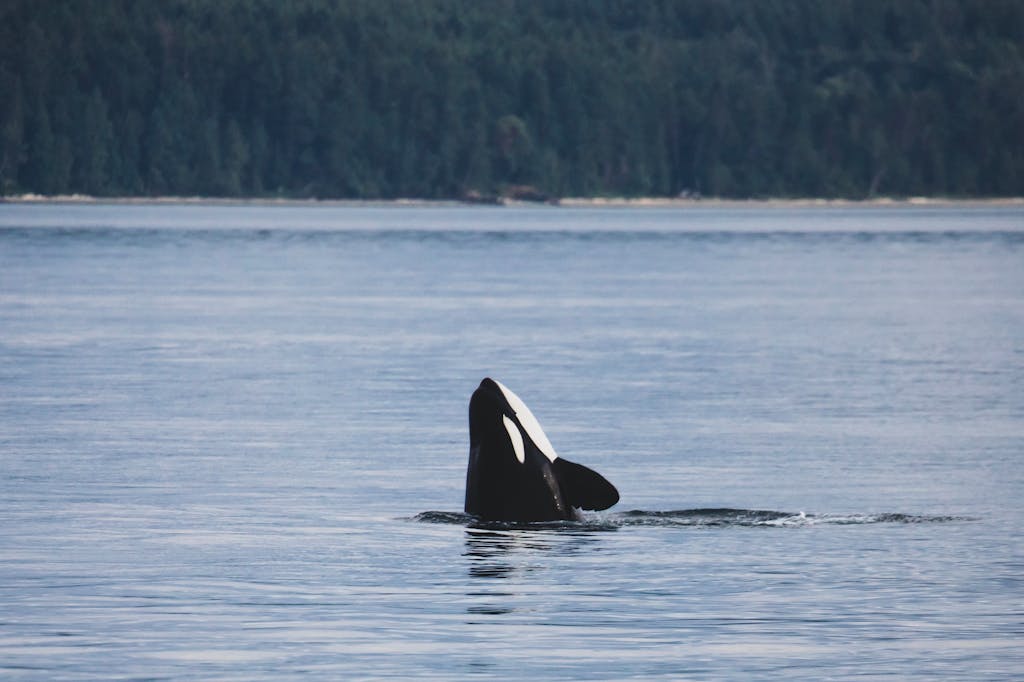
Wild orcas can travel an average of 200 to 300 kilometres per day. They dive to depths of 30 to 300 metres, repeatedly, throughout the day and night. They hunt cooperatively, using techniques that vary by ecotype but are passed down through generations under a form of culture, living in stable, matrilineal social groups. Some populations are migratory. All are acoustically complex, with dialects specific to their pod that individuals acquire in early life and maintain throughout.
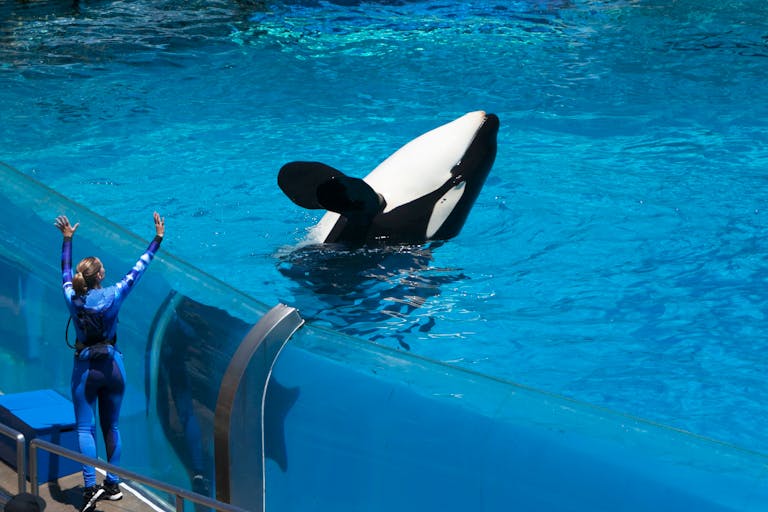
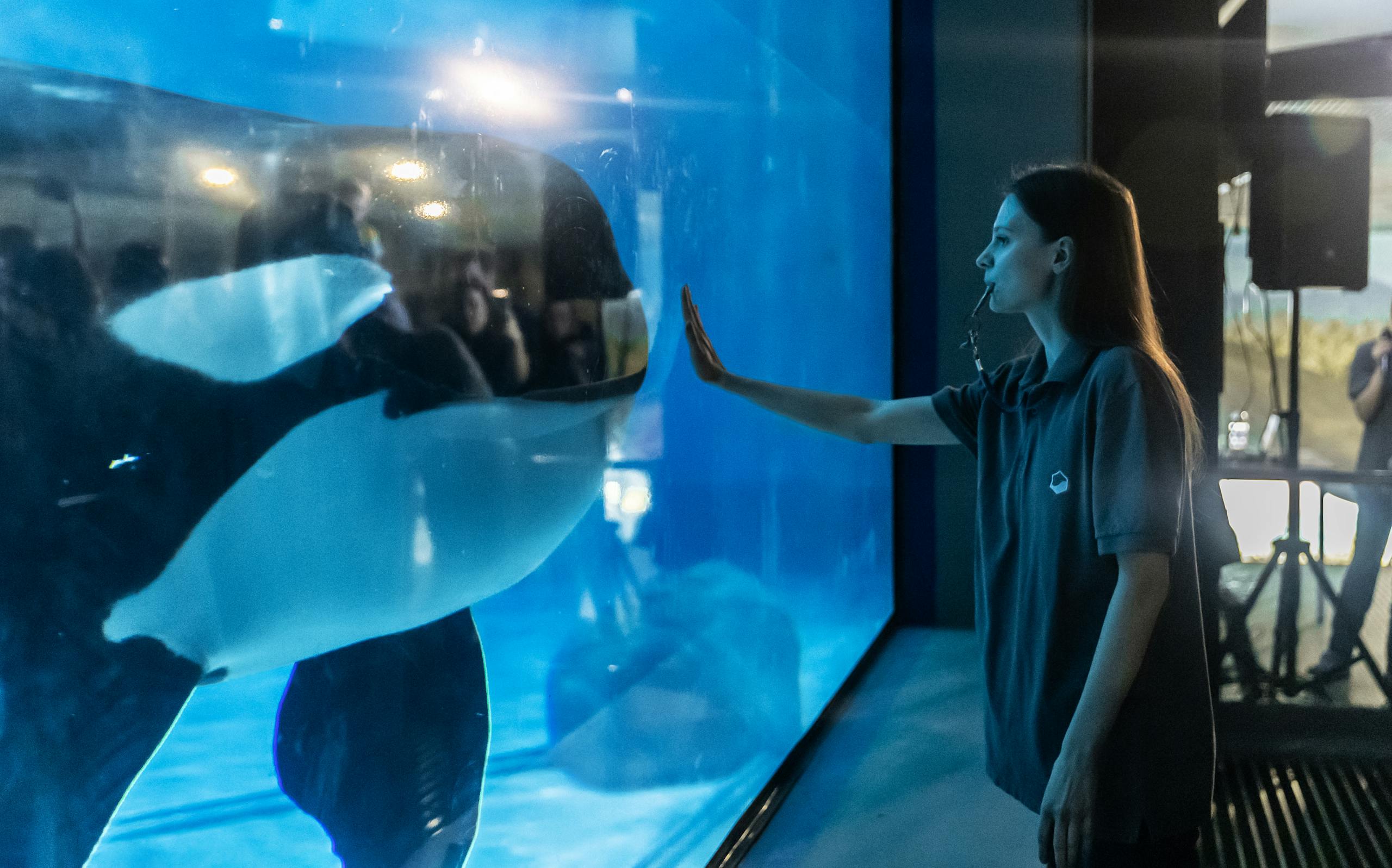
A standard performance tank measures approximately 20 to 40 metres long and reaches just 12 metres at its deepest point. Within these concrete walls, the temperature is controlled, the salinity is fixed, and the acoustic environment bears absolutely no resemblance to the open ocean. With their diet reduced entirely to thawed fish and ice cubes for hydration, these artificial parameters sit as far from natural conditions as physically possible. None of this is a matter of debate; it is basic biology applied to an environment designed exclusively for human viewing angles, rather than the species confined within it.
The average lifespan of a captive orca is roughly half of what their wild counterpart can expect. In the wild, healthy females have an average life expectancy of 50 years, with some individuals living up to 80 or 90 years. Wild male orcas live on average for 30 years, but frequently reaching 50 to 60 years of age in healthy populations, whereas in captivity, most males die before reaching their twenties.
Behavioural Pathology and Social Trauma
The physical limitations of the tank also systematically dismantle the social and behavioural structures that define orcas. When an apex predator with complex emotional and social needs is confined to a space that denies every natural impulse, the result is a predictable manifestation of behavioural pathology.
Stereotypies
The most pervasive indicator of chronic psychological distress in captive populations is the development of stereotypies, which are repetitive, functionless behaviours driven by frustration and confinement. Orcas are no exception. As detailed by Marino et al. in their comprehensive review of captive orca welfare, these compulsive behaviours are a direct diagnostic marker of compromised psychological well-being. In a tank, an animal with nothing to do will chew concrete, pop its jaw against steel bars, or swim in fixed, endless circles, translating mental stagnation into irreversible physical damage.
Aggression Between Orcas
In the wild, orcas resolve social tension through space; when conflict arises, individuals separate and the ocean provides the distance that defuses it. In a tank, there is nowhere to go. Aggression is the predictable consequence of housing cognitively complex animals in confined spaces. The primary evidence is rake marks, which are parallel grooves left from teeth that are present on virtually every captive animal photographed.
The case of Tekoa at Loro Parque is a well-documented example of how this aggression is fundamentally linked to unstable social structures directly caused by captivity and/or disorganised collections. Some facilities force together conflicting conspecifics, individuals of different origins or groups lacking a strong matriarch, which creates chaotic social dynamics that would never happen in the wild. Tekoa’s early life was defined by severe maternal aggression, leading to permanent separation from his mother in 2001 and years of shifting between surrogate groups. When transferred to Loro Parque in 2006 alongside three other young orcas, all separated from their mothers at early ages, the lack of a stable matriarchal structure left their relationships volatile. Tekoa was regularly bullied, culminating in a public show where he was attacked and left bleeding profusely in the pool.
Aggression Towards Humans
While the industry frames trainer incidents as unpredictable anomalies, the record demonstrates a clear, consistent pattern. These events are only mediatised when casualties are fatal, like the high-profile case of Tilikum in the movie Blackfish. Yet, beyond those dramatic fatalities, non-fatal aggression toward staff is a common, documented occurrence across multiple facilities and decades.
At Loro Parque, the consequences of housing socially fractured animals became clear in October 2007, when Tekoa pulled trainer Claudia Vollhardt underwater repeatedly, dragging her to the bottom and causing a lung injury alongside a fractured forearm. Just two years later, on Christmas Eve 2009, the male Keto fatally attacked trainer Alexis Martinez during a rehearsal. Keto had shown escalating aggressive behaviours in the preceding months, including five separate open-mouthed charges at trainers, meaning the attack was predicted but not acted upon.
During the late 1990s and early 2000s at Marineland Antibes, the young male Valentin charged open-mouthed toward a trainer while thrashing, and spent a two-week period continuously attempting to drag a trainer underwater by his socks. The female Freya similarly disrupted planned waterworks, once aggressively pushing a trainer around the pool for 15 minutes, and later breaking protocol in September 2008 by pushing a trainer through and under the water without being asked. These injuries that happened over three decades and multiple marine parks, reflect a system that puts humans in the water with animals under chronic psychological stress. ( Follow here for Wikie and Keijo’s story, the two last orcas after Marineland closed in January 2025)
Main Diseases of Captive Orcas
The physical and psychological trauma of confinement regularly manifests as severe, systemic illness. In captivity, pathogens that a healthy wild orca would routinely fight off can become fatal, because of an environment that actively dismantles the animal’s immune system.
Dental Pathology
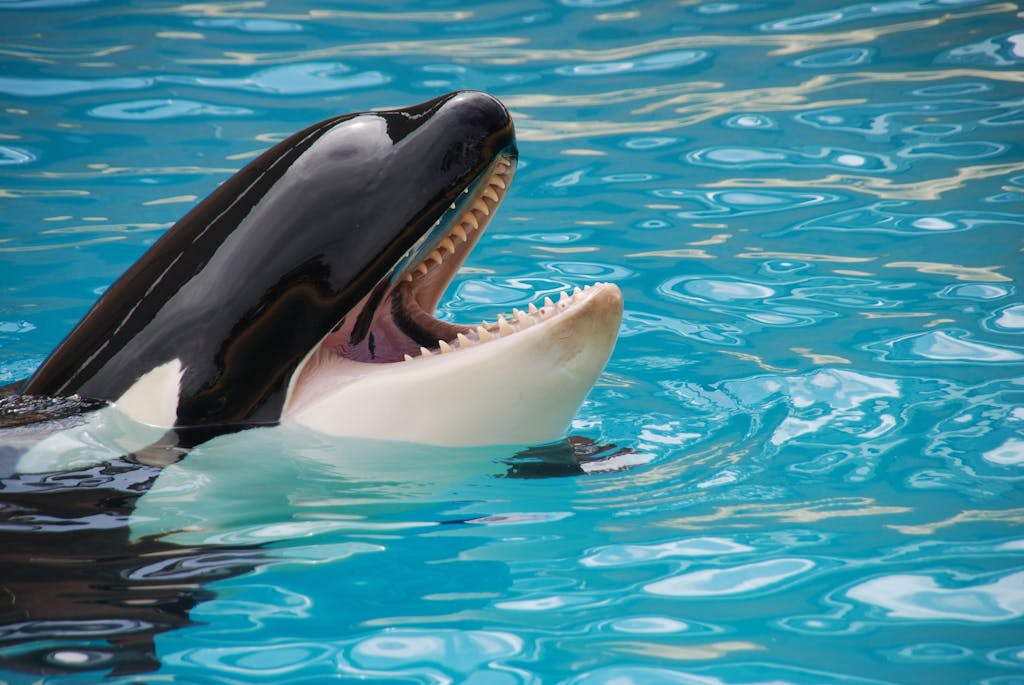
In wild populations, orca teeth show gradual, symmetrical wear over decades, more so with specific diets (elasmobranchs aka sharks and rays). In captive animals, the pattern is entirely different. A study by Jett et al. (2017), examining 29 captive orcas, found that every single animal had some form of tooth damage. Forty five percent of whales exhibited “moderate” mandibular coronal wear, and 24% exhibited “major” to “extreme” wear. They also found that 47 to 61% of teeth had undergone pulpotomy: a procedure where a hole is drilled into the tooth to remove infected pulp tissue. Unlike human dentistry, the resulting cavity is left open for the remainder of the animal’s life, requiring daily flushing with antiseptic to manage chronic infection. The authors associated these lesions to the following oral stereotypies: compulsively biting, chewing, and jaw-popping on concrete tank walls, steel gates, and filtration grates.
The chain from stereotypy to infection to death is not theoretical but has been documented in necropsy. At Marineland Antibes, court-appointed veterinary report shed light on a grim chain of events. Both Moana and Inouk suffered from chronic, advanced dental disease. Moana’s case reveals ongoing dental issues and uncontrolled pain, where recurrent treatments failed to contain the issue and instead led to further medical complications, including gastric ulcers, fungal pneumonia, and septicaemia. Inouk, who ultimately died of peritonitis caused by foreign body ingestion, had a mandibular CT-scan that revealed osteomyelitis: an infection of the jawbone itself. These findings demonstrate the link between oral trauma and systemic failure.
Dorsal Fin Collapse
Collapsed dorsal fins are so common in captive male orcas that the industry has normalised them. While facilities claim this occurs in the wild, it is exceptionally rare there, appearing only in animals that are injured, malnourished, or otherwise compromised. In captivity, collapse is virtually universal in adult males. It is caused by the total absence of the sustained, directional swimming required to develop and maintain structural connective tissue. A fin that can reach 1.8 metres in height in a healthy wild male simply droops to the side in a tank, a visible marker of a compromised fitness.
Gastric Disease and Gastrointestinal Volvulus
Gastrointestinal ulcers are highly prevalent in captive orca populations, a condition well established across species as stress-related. More critical is intestinal volvulus, where a section of the bowel twists and cuts off its own blood supply, causing rapid death. While observed in stranded wild specimens, this condition is heavily overrepresented in captive killer whales. Valentin, a male at Marineland Antibes, died from this condition in 2015. Similarly, Ula, Morgan’s two-year-old first calf, died of intestinal volvulus, potentially exacerbated by an inadequate diet from being bottle-fed with formula.
Opportunistic Infections and Immune Naivety
The industry argument that controlled environments protect animals from wild pathogens does not hold up to veterinary scrutiny. Captive orcas die in significant numbers from pneumonia, septicaemia, and fungal infections. These are opportunistic, stress-mediated conditions, serving as definitive indicators of an immune system under chronic, lifelong load.
Reproduction Under Captive Conditions
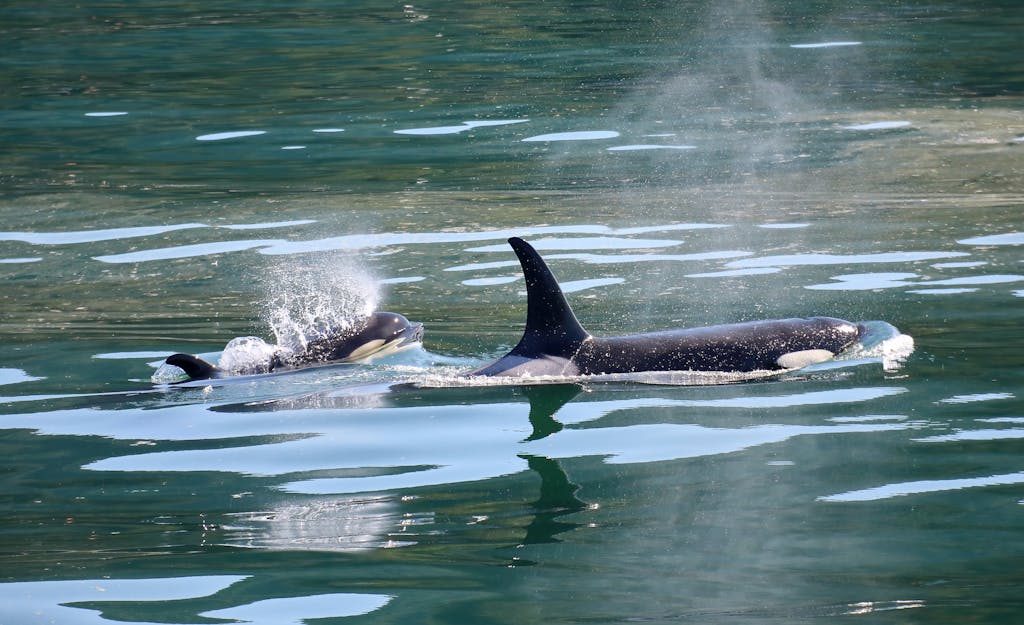
Orcas are among the most socially complex reproducers in the animal kingdom, with a reproductive strategy built around lifelong matrilinear bonds. Wild females reach sexual maturity at around 15 years of age, giving birth every three to five years. Calves remain with their mothers, often for life. Female orcas also undergo menopause, an evolutionary rarity where post-reproductive matriarchs play a critical role in the survival of the pod by guiding adult offspring and grand-offspring. The matriarch is functionally essential to the survival of the group.
Captive breeding programmes have systematically dismantled this entire reproductive structure, replacing biological milestones with commercial logistics.
Maternal Disruption and Separation
In captivity, females can be artificially inseminated as young as eight years old, long before psychological or physical maturity. Calves are commonly separated from their mothers for facility transfers or to facilitate bottle-feeding, inducing severe, prolonged distress in both animals.
Because many captive females were removed from their own mothers at early ages, they frequently lack the maternal experience required to raise offspring. This cycle of trauma leads to calves being rejected, neglected, or met with severe maternal aggression. A stark example is Kayla, who was separated from her mother at SeaWorld at just two years old. At age 16, Kayla attacked her own first calf with enough violence to push it against the glass, lift it entirely from the pool, and slam it with her flukes. The calf required immediate, permanent separation to survive.
Inbreeding and Genetic Compression
As the global captive population has shrunk, inbreeding has become structurally inevitable. Facilities working to maintain their performance collections have repeatedly relied on an ever-narrowing gene pool. Tilikum fathered at least 21 calves across the SeaWorld system, heavily centralising the genetics of the captive population. At Marineland Antibes, Keijo carries a 12.5% inbreeding coefficient, the direct result of his mother, Wikie, being bred with her own half-brother, Valentin. Furthermore, as research on wild populations highlights the importance of ecotypes, the marine parks have heavily hybridised their captive populations. The international studbook, designed to manage genetic diversity, is instead documenting the progressive compression of a dwindling population with fewer viable breeding options left.
Elevated Mortality Rates
The biological consequence of this genetic compression and social instability is a high rate of reproductive failure. Stillbirths in captive populations are substantially elevated. Data compiled through 2011 revealed a neonatal mortality rate of 50% within the first six months of life. As researchers noted, this figure likely underestimates the true toll due to inconsistent industry reporting regarding early losses and unviable pregnancies.
The matriarchal framework that preserves wild orca society cannot exist within concrete walls. Captive groups are assembled based on facility logistics and commercial utility rather than kinship or social compatibility. In a tank, there are no grandmothers to navigate environmental stress or pass down survival knowledge to buffer the group against mortality. There is only management, and it is not a substitute for a matriarch.
The evidence across all these domains is eloquent and converges on the same conclusion. The welfare of captive orcas is fundamentally and chronically compromised. No enrichment programme, however well intentioned, can compensate for the scale of deviation from their evolutionary baseline. Without the social structures they are built for, deprived of the behaviours that define them, what would actually be required to meet their needs (open space, matrilineal family groups, natural breeding dynamics ) would not improve the captive model, it would simply abolish it.
The evidence across all these domains is consistent and has been accumulating for at least two decades. What is perhaps most striking is not the evidence itself, but the fact that this debate remains so fiercely contested. Those who defend captivity are the first to invoke scientific authority, yet the claims they rely upon (that captive populations thrive, that controlled conditions spare animals the harshness of the wild, that these facilities operate in the animals’ best interests) do not survive contact with their own data. As the welfare argument becomes increasingly untenable, the industry presents other justifications: conservation, research, education. Those arguments are no more robust, and no more honestly made. They will be examined in the next article.
References:
Marino L, Doyle C, Rally H, O’Brien L, Tennison M, Jacobs B. An update on captive cetacean welfare. PeerJ. 2025 Oct 31;13:e19878. doi: 10.7717/peerj.19878. PMID: 41189571; PMCID: PMC12581915.
Jett J, Visser IN, Ventre J, Waltz J, Loch C. Tooth damage in captive orcas (Orcinus orca). Arch Oral Biol. 2017 Dec;84:151-160. doi: 10.1016/j.archoralbio.2017.09.031. Epub 2017 Sep 29. Erratum in: Arch Oral Biol. 2018 May;89:93. doi: 10.1016/j.archoralbio.2018.02.015. PMID: 28992601.
Begeman L, St Leger JA, Blyde DJ, Jauniaux TP, Lair S, Lovewell G, Raverty S, Seibel H, Siebert U, Staggs SL, Martelli P, Keesler RI. Intestinal volvulus in cetaceans. Vet Pathol. 2013;50(1):141-148. doi: 10.1177/0300985812465327. PMID: 23150643.
Ridgway SH. Reported causes of death of captive killer whales (Orcinus orca). J Wildl Dis. 1979;15(1):99-104. doi: 10.7589/0090-3558-15.1.99. PMID: 459051.
Rose N. Killer controversy: why orcas should no longer be kept in captivity. Humane Society International and The Humane Society of the United States. 2011 Sep.
Cour d’appel d’Aix-en-Provence. Rapport d’expertise vétérinaire judiciaire: Marineland Antibes. RG 22-11225 [Internet]. Aix-en-Provence: Cour d’appel; 2025 [cited 2026]. Available from: https://one-voice.fr/app/uploads/2025/04/ONE-VOICE-MARINELAND-CA-AIX-EN-PROVENCE-RG-22-11225-070425-Rapport-final.pdf