Wikie and Keijo: The Orcas Caught Between a Law, a Lobby, and a Deadline
The story of Marineland Antibes is not just about two orcas. It is about what happens when political ambition, corporate interest, and animal welfare collide and the animals themselves are the last consideration on the agenda.
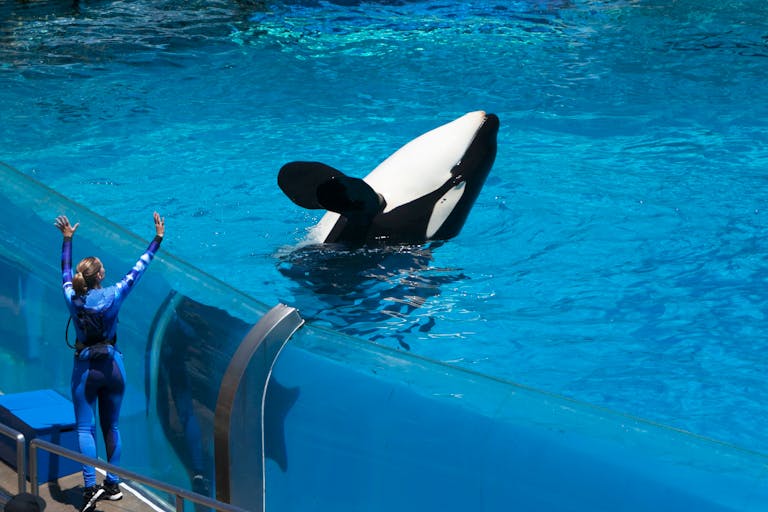
France made international headlines in 2021 when it passed landmark legislation banning cetaceans from live entertainment and captive breeding programmes. It was hailed as a turning point; a rare moment where science, public opinion, and political will appeared to align in favour of animals. Four years later, twelve bottlenose dolphins and two orcas are still awaiting their fate. Stuck in a closed park, in cracking tanks covered with algae, they have been waiting for the past 18 months for humans to stop arguing about where to send them. This is the disgraceful story of Marineland Antibes, of Wikie and Keijo, and of a situation that is, depending on your perspective, either a cautionary tale about the limits of ideological progress, or a masterclass in institutional bad faith. Likely both.
The Park: 55 Years on the French Riviera
Marineland Antibes opened in 1970, founded by Count Roland de La Poype on 26 hectares of the Côte d’Azur, just outside Antibes, a piece of land currently worth several hundred million dollars. For decades, it was Europe’s largest marine zoo, drawing nearly 900,000 visitors a year at its peak. Its centrepiece was always its orca programme. Over 55 years of operation, 18 orcas passed through Marineland’s tanks. Of those, 10 died there, 4 were stillborn, 2 were transferred out, and 2 remain: Wikie and Keijo.
The first animals arrived via captures from the wild. The last were born into concrete. The park’s story mirrors that of the global captive cetacean industry: spectacular popularity through the 1970s and 80s, mounting scientific scrutiny through the 90s and 2000s, and then the cultural turning point of Blackfish in 2013, the documentary that reframed public understanding of captive orca welfare and sent shockwaves through the industry. In 2006, the park was acquired by Parques Reunidos, a Spanish leisure group. Attendance had already been declining. In October 2015, severe flooding submerged the facility and killed Valentin, a 19 year old male orca born at the park, from intestinal volvulus and rupture. Post pandemic, Marineland was already a park in managed retreat. The 2021 legislation simply brought the timetable forward. The park closed permanently on 5 January 2025. With 90% of visitors coming for the orca and dolphin shows, there was no viable business without them. What Parques Reunidos did not have, when it locked its gates, was a plan for the animals it was leaving behind.
The Orcas: A Family Shaped by Captivity
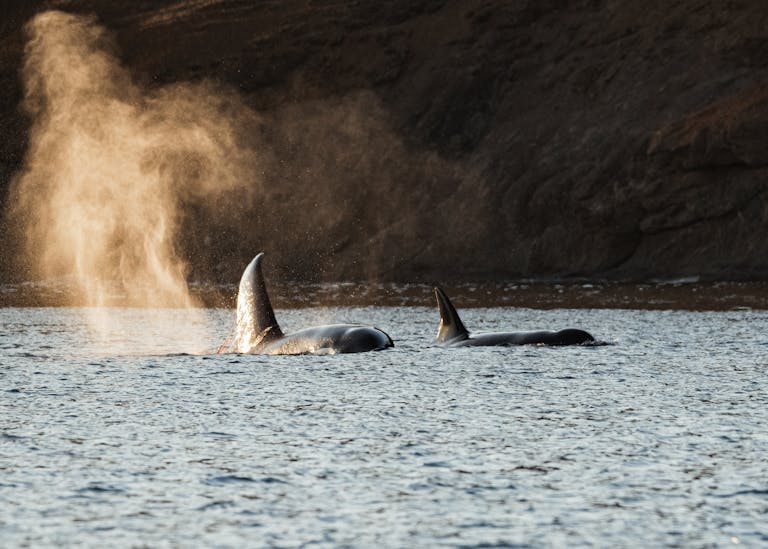
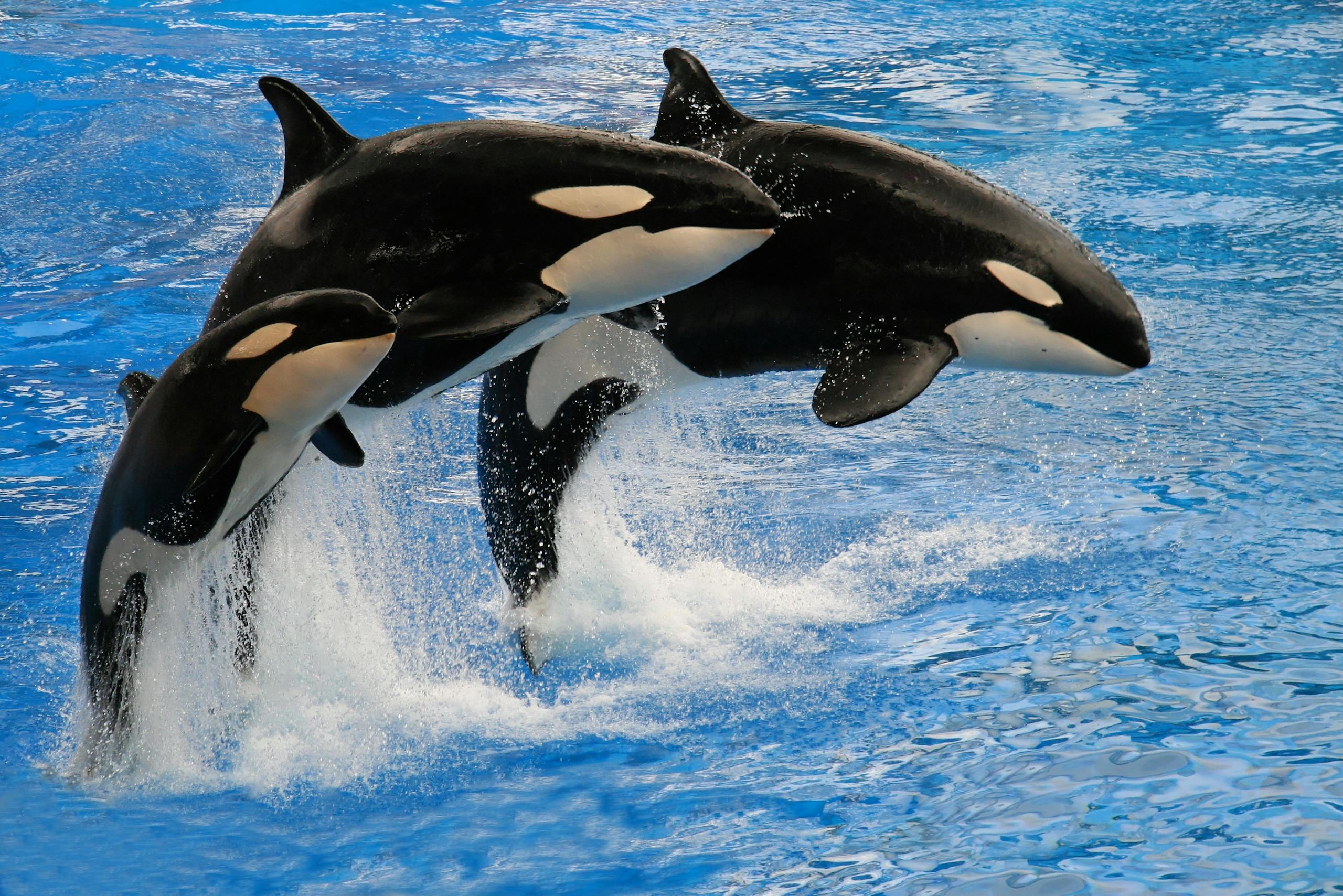
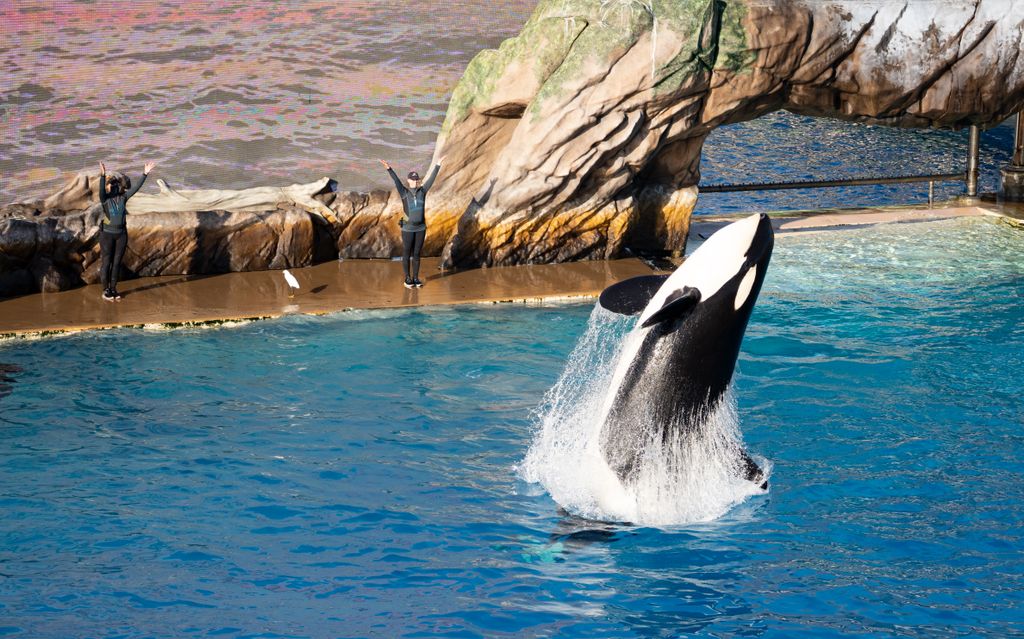
Since the time of closure, twelve bottlenose dolphins and two orcas remain at Marineland: Wikie and her son Keijo. Wikie, now 24 and turning 25 in June 2026, was born at Marineland. She has never known any other environment. In 2011, she had her first calf, Moana, and in 2013, Keijo. Keijo’s father was Valentin, Wikie’s half brother, making him the product of a half-sibling mating with an inbreeding coefficient of 12.5%. At the time the French law was voted, there were four orcas left in Marineland, but two of them died before the gates closed. Moana died in October 2023 of acute septicaemia, following years of significant dental disease. Inouk, Wikie’s brother, died in March 2024 of peritonitis after ingesting a metallic foreign body. He too had suffered chronic dental pain, which may have contributed to his accidental death. Both deaths are documented in an independent veterinary expert report commissioned by the Court of Appeal of Aix en Provence. Two deaths, only a few months apart, occurred in a facility already winding down. By the time Marineland closed, the orca group had halved (follow here to learn more about the welfare of captive orcas).
The Law and Its Limits
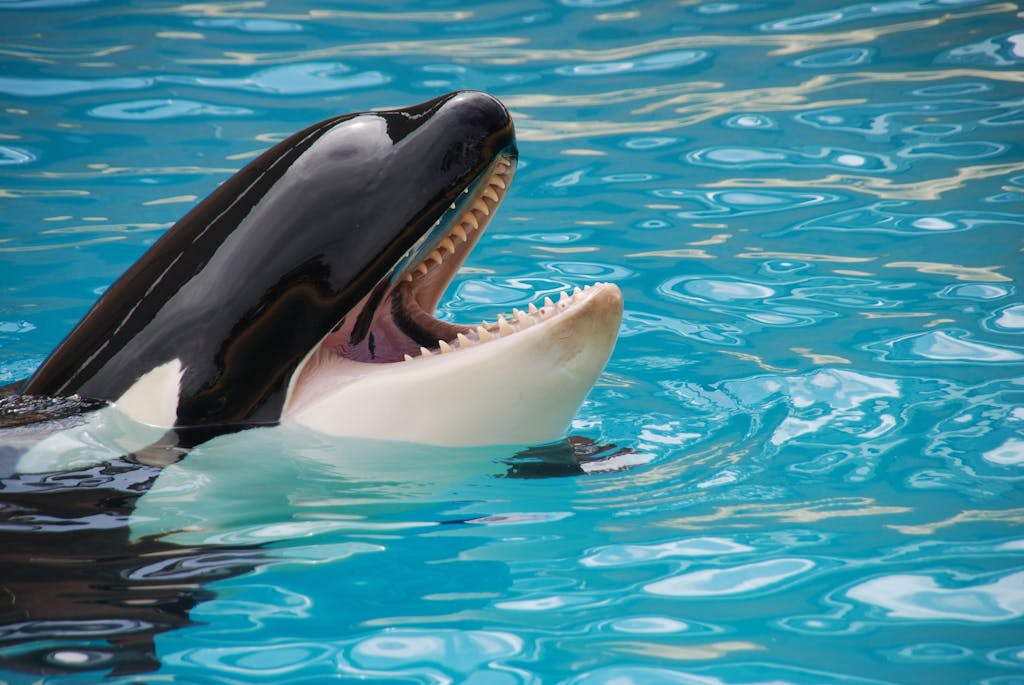
The 2021 legislation banned cetacean performances for entertainment and captive breeding, whilst preserving exceptions for science, research, and education. What it did not establish was any clear, funded mechanism for where the animals would go. That gap between legislative intent and operational reality is the fault line running through everything that followed. Although this legislation was perceived as a victory by NGOs and public opinion, the marine parks operating under the European Association for Aquariums and Marine Mammals (EAAM) umbrella and zoological institutions saw it as a demagogical attack on their craft and against scientific rationale. This fundamental disagreement created a profound divide in how the public is taught to view these animals. While corporate facilities continue to market their programmes as vital zoological work, the reality behind the glass suggests that the line between genuine science and commercial theatre has been entirely erased. The conservation framing routinely used to justify cetacean captivity deserves scrutiny of its own, as the industry’s arguments increasingly serve to protect its infrastructure rather than the species it claims to save (follow here to read about the fallacy of captive orcas conservation).
Eighteen Months of Lobbying
Winter 2024-25
The timeline since closure reads less like a managed transition and more like a political battle leading to a sequence of institutional reversals. After the park closure, international NGOs continued to advocate for a tank free life, proposing to send Wikie and Keijo to a sea sanctuary in Canada where they could live in the open ocean under human supervision, without the need to perform for entertainment. Standing at the other end of that continuum, Marineland and the lobby of zoos and marine parks strive to keep the orcas in tanks. They have wanted to sell the orcas to a different marine park, but in order for the whales to travel, they need CITES permits, approved and issued by the government. Their first attempt was to send Wikie and Keijo to Japan, but the French government denied it, citing the extensive journey and highlighting Japan’s absence of equivalent animal welfare standards.
Spring 2025
Marineland then turned to Loro Parque in Tenerife, Spain. However, Morgan, one of the resident orcas there, had just given birth to a calf named Teno. The prospect of introducing two new adults into that specific group raised immediate concerns about aggression and social instability. Spain’s CITES scientific authority blocked the transfer regardless, ruling that the Tenerife facilities did not meet minimum standards for the species. Wikie and Keijo remained stuck in the ghost park for many more long months. Over the summer of 2025, drone footage showing their tanks blanketed in algae went around the world and reignited public outcry.
Winter 2025
The French government issued a formal position: Wikie and Keijo should go to the Whale Sanctuary Project in Nova Scotia, Canada, describing it as the most credible, most ethical option available. The sanctuary confirmed it could potentially be ready by the end of summer 2026, contingent on securing $15 million USD in construction funding. That endorsement lasted approximately five months ( follow here to understand the complexities of sea sanctuaries for orcas).
Spring 2026
Following a structural survey revealing the deteriorating condition of the tanks, and the increasing judicial pressure of Marineland threatening to sue the government, the French Minister for Ecological Transition visited Marineland and declared the situation untenable. In March, the government imposed an ultimatum on the Whale Sanctuary Project to deliver guarantees on their funding and construction timeline, while simultaneously bringing the Loro Parque option back on the table. Meanwhile, the legal landscape had quietly shifted and France could issue an export permit to Spain unilaterally. Spain’s scientific authority, which had blocked the import in 2025, is no longer the gating factor. The minister formally approved the transfer in mid May 2026 and a move is now in the cards before the end of June 2026. Yet Loro Parque’s tanks are the same dimensions they were when Spain’s own agency deemed them inadequate twelve months ago, and would now have to house not four but six orcas. Teno is only one year old and the concerns about group disruption have not gone away. What has changed is the urgency, and who is being asked to absorb the cost of it.
What Future for Wikie and Keijo?
At the time of writing, the fate of Wikie and Keijo appears sealed. They should be transferred to Loro Parque before the end of June, where they will be forced into a new group of orcas and will have to perform again, living in the same precarious conditions as always. Tenerife may not even be their last destination. After changing ownership and country, they could be sold on to another remote facility and even separated. This series examines the way captive cetaceans are treated as commodities, what captivity does to animals of this cognitive complexity, what conservation actually means when invoked to justify decisions that serve something else entirely, and how the machinery of institutions becomes the primary obstacle to the welfare it claims to protect. These are not rhetorical questions. They have answers. Wikie and Keijo have been waiting eighteen months, and there is a real possibility that their troubles are not over. If the future does not look bright for them, we can at least make sure our eyes are open. This must never happen again.